
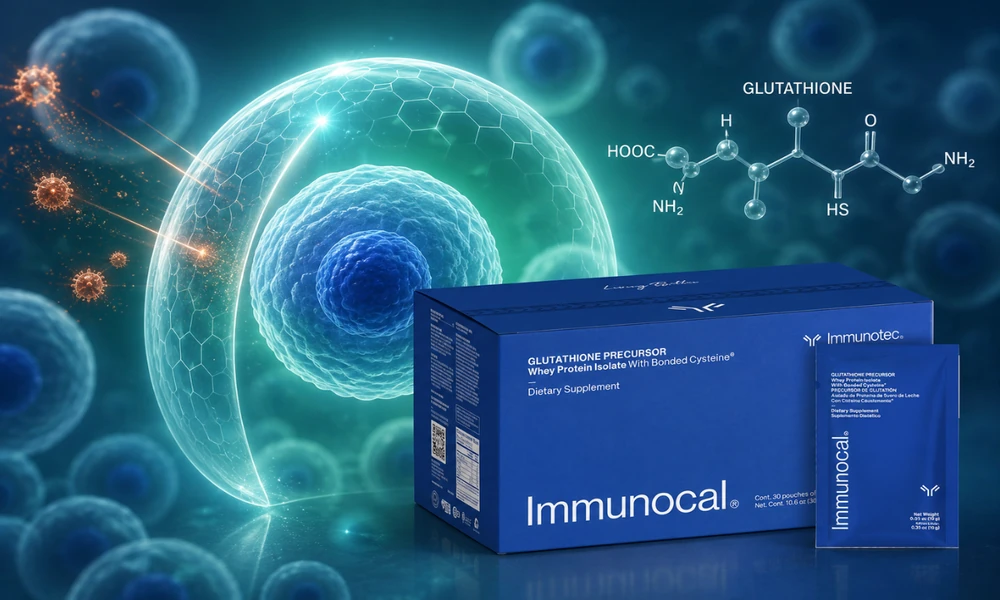
Glutathione is an antioxidant made naturally inside the body. It is found in nearly every cell and helps protect cells from everyday damage.
You may have heard glutathione called the “master antioxidant.” This nickname comes from its important role in the body and its ability to help recycle certain other antioxidants. However, glutathione is only one part of the body’s larger defense system.
This beginner-friendly glutathione guide explains how the body makes it, what it does, and how products such as Immunocal fit into the conversation.
How Does the Body Make Glutathione?
Glutathione is made from three amino acids:
- Cysteine
- Glycine
- Glutamate
Amino acids are building blocks used to make proteins and other important substances. The body puts these three amino acids together inside its cells to produce glutathione.
Cysteine is especially important because it is often the amino acid that limits how much glutathione the body can make. If the body does not have enough available cysteine, glutathione production may be affected.
The liver plays a major role in producing, using, and managing glutathione. However, glutathione is also made and used throughout the body.
What Does Glutathione Do to the Body?
Glutathione helps protect cells from oxidative stress. Oxidative stress happens when unstable molecules called free radicals become greater than the body’s ability to manage them.
Free radicals are created during normal processes such as breathing, producing energy, exercising, and breaking down food. They can also come from cigarette smoke, pollution, excessive sunlight, and certain chemicals.
Glutathione helps neutralize some of these unstable molecules before they can damage cells. It also helps return certain antioxidants to a form the body can use again.
Glutathione supports normal processes in the liver and takes part in the way the body handles some unwanted substances. It is also involved in normal immune activity and cell function.
These important roles do not mean that raising glutathione will prevent or cure a health condition. Glutathione is part of the body’s normal biology, not a guaranteed treatment.
Why Is It Called the Master Antioxidant?
The term “master antioxidant” is not an official medical title. It is a popular nickname based on glutathione’s wide range of jobs inside cells.
Unlike many antioxidants obtained mainly through food, glutathione is produced directly by the body. It works inside cells, where it helps manage oxidative stress and supports other protective processes.
Glutathione can also help recycle antioxidants such as vitamins C and E after the body has used them. This gives it a central role within the body’s antioxidant network.
The nickname can make glutathione sound like the only antioxidant that matters. In reality, the body depends on many antioxidants, nutrients, enzymes, and healthy systems working together.
What Can Affect Glutathione Levels?
Glutathione levels are not fixed. They can change based on age, nutrition, sleep, physical activity, alcohol use, environmental exposures, and general health.
The body needs enough protein and amino acids to produce glutathione. Diets that do not provide enough protein may reduce the supply of its building blocks.
Long periods of poor sleep and continued exposure to smoke or pollution can also place greater demands on the body’s antioxidant defenses. Heavy alcohol use may affect glutathione, particularly in the liver.
Aging is another factor. The body’s ability to produce and maintain glutathione may decline over time.
This does not mean one habit or food controls a person’s glutathione level. Several factors usually work together.
What Foods Support Glutathione Production?
Some foods naturally contain glutathione, while others provide nutrients the body uses to make it.
Foods associated with glutathione support include asparagus, avocado, spinach, broccoli, cauliflower, and other vegetables. Eggs, poultry, fish, dairy products, beans, and other protein sources provide amino acids needed for normal production.
Garlic, onions, broccoli, and similar vegetables contain sulfur compounds. Sulfur is an important part of the cysteine used to make glutathione.
Cooking, storage, digestion, and food processing can affect the amount of glutathione that reaches the body. Instead of looking for one “best” food, focus on a balanced diet with enough protein, fruits, and vegetables.
What Is Immunocal Used For?
Immunocal is a whey protein isolate designed to provide cysteine in a form the body can use as a building block for glutathione production. It does not simply act as a large dose of finished glutathione. Its purpose is to provide the body with important ingredients used to make its own glutathione.
The product is mixed into a cool or room-temperature food or drink. High heat should be avoided because heat can change the structure of whey proteins. Consumers should always follow the current package directions.
Immunocal is intended for nutritional support. It should not be presented as a treatment for diabetes, anxiety, cancer, infections, or another medical condition.
Because Immunocal is made from whey protein, people with a milk-protein allergy should not use it unless a qualified healthcare professional says it is appropriate. People with kidney disease, a protein-restricted diet, or other medical concerns should also speak with their healthcare provider before adding a protein supplement.
Does Immunocal Really Work?
The answer depends on what someone expects it to do.
Immunocal has been included in published research involving glutathione and cysteine-rich whey protein. Studies in certain groups have found that cysteine-rich whey protein can support or increase measured glutathione levels. Immunotec also lists its published studies and product research.
The science behind the product is based on a well-understood fact: cysteine availability is one of the main factors involved in the body’s production of glutathione. AnNIH-reviewed explanation of glutathione synthesis identifies cysteine as a key building block.
However, research showing a change in glutathione levels does not prove that Immunocal will make every person feel different or treat a disease. Results can vary based on diet, age, health, serving size, and consistency.
A fair description is that Immunocal provides cysteine-rich whey protein intended to support the body’s natural production of glutathione. Expectations should remain realistic.
Should Everyone Take a Glutathione Supplement?
The body already makes glutathione, and many people obtain its building blocks through a balanced diet. A supplement may not be necessary for everyone.
Before using Immunocal or another glutathione-related product, consider your diet, health needs, allergies, and current medications. A doctor or registered dietitian can help you decide whether a supplement fits your situation.
Supplements should support good nutrition, not replace it. Sleep, physical activity, avoiding tobacco, limiting excessive alcohol, and eating a balanced diet all remain important.
Understanding Glutathione and Immunocal
Glutathione is an antioxidant the body produces from cysteine, glycine, and glutamate. It helps protect cells from oxidative stress and supports several normal cellular processes.
Immunocal takes a precursor-based approach by providing cysteine-rich whey protein. If you are interested in learning more, review the currentImmunocal product information and speak with a healthcare professional if you have health concerns or dietary restrictions.
This article is for general educational purposes and is not medical advice. Immunocal is a nutritional supplement and is not intended to diagnose, treat, cure, or prevent disease.